






The Demon in the Living Room
A 150-year-old thought experiment about a tiny sorting demon turns out to explain both what Aura is and why $PSI cannot be anything but scarce.
In 1867, James Clerk Maxwell imagined a troublemaker small enough to fit between molecules. Picture a sealed box of gas, divided by a wall with one tiny door, and a nimble being minding that door. It pushes nothing; it only watches. When a fast molecule drifts toward the door, it opens; when a slow one approaches from the other side, it opens for that one too. Fast collects on one side, slow on the other. Hot and cold assemble themselves out of a uniform warm murk — order wrung from disorder, apparently for free. Given a little patience, the demon could run your refrigerator on nothing but good judgment about when to open a door.
This was not a parlor trick; it was an accusation against the second law of thermodynamics — the sturdiest law we have, the one that says order does not organize itself for nothing. The demon haunted physics for nearly a century precisely because the theft looked so clean. The resolution, assembled slowly by Szilárd, then Landauer, then Bennett, is the single most useful sentence a company that builds thinking machines can carry: the demon's work is real, and what it costs is information. To sort a molecule the demon must first know it — measure it, write "fast" or "slow" into some memory. Memory is finite; to keep watching, it must eventually erase. And Landauer proved that erasing a single bit carries an irreducible price — a minimum quantity of energy surrendered as heat that no cleverness can avoid. The demon never cheated. It paid, in the only currency the universe accepts: the cost of knowing, and the cost of forgetting.
We build demons for a living. An assistant that lives in a room is a Maxwell's demon pointed at a conversation. All day the molecules arrive — voices, footsteps, a television, a question meant for someone else, a question meant for it. Its whole art is sorting: which of this is signal, who was addressed, what single thing is worth opening the door to say. The door is its voice. And the first thing you notice about a good one is how rarely the door opens.
We are asked to read that silence as timidity, or as a missing feature. It is neither. It is the demon being honest about its own physics. Every act of sorting costs something real; the most disciplined thing an intelligence in a room can do is to decide, correctly, not to act — to let the molecule pass. Restraint is not manners laid over the intelligence like a coat. Restraint is the intelligence spending itself only where the spend buys order, and conserving everywhere else. A device that talks constantly is not generous. It is a demon that has stopped doing the arithmetic.
Which brings us to the bill. If thinking is physical — and Landauer's floor says it is, down in the silicon where every erased bit warms the room by a measurable sliver — then there is no such thing as a free thought. Each sorted idea is paid for in energy and in the scarce capacity of a chip to hold the world still for a moment and separate it. Compute is not an abstraction drifting toward zero. It is a physical good with a floor the universe set, and demand for it is simply the demand to turn noise into order — which is to say, the demand for intelligence itself. That demand does not fall.
This is the whole argument for why $PSI is a commodity and not a mascot. Oil is stored sunlight — ancient low entropy, pooled and waiting to be spent. Compute is the same kind of thing: stored capacity to reduce entropy, to make a sorted thought where there was only murk. A claim on compute is therefore a claim on the one input every intelligent system is actually short of, priced by a floor physics will not lower. Fix the supply, let the demand for order rise as it always has, and the claim can only grow dearer. You can spend it — run the demon, sort your evening, get your answer — or you can hold it, the way people hold a barrel against a colder winter. Both are rational. Neither requires the token to be anything but what it is.
There is a last clause in Maxwell's box that we treat as the entire product. The demon only works because the box is closed. The instant it ships each molecule's position out to a distant ledger to be recorded there, the box has a hole in it, and the second law comes back through the hole — the order you bought leaks away, and worse, your gas is now someone else's to read. An assistant that reduces the disorder of your life by broadcasting its details has not reduced anything; it has moved the mess to a server you cannot see. The only honest demon keeps its ledger inside the box. On-device is not a privacy feature bolted onto intelligence; it is the closure condition that lets the intelligence mean anything at all. Your evening is sorted in the room and remembered in the room, and the demon forgets it to everyone but you.
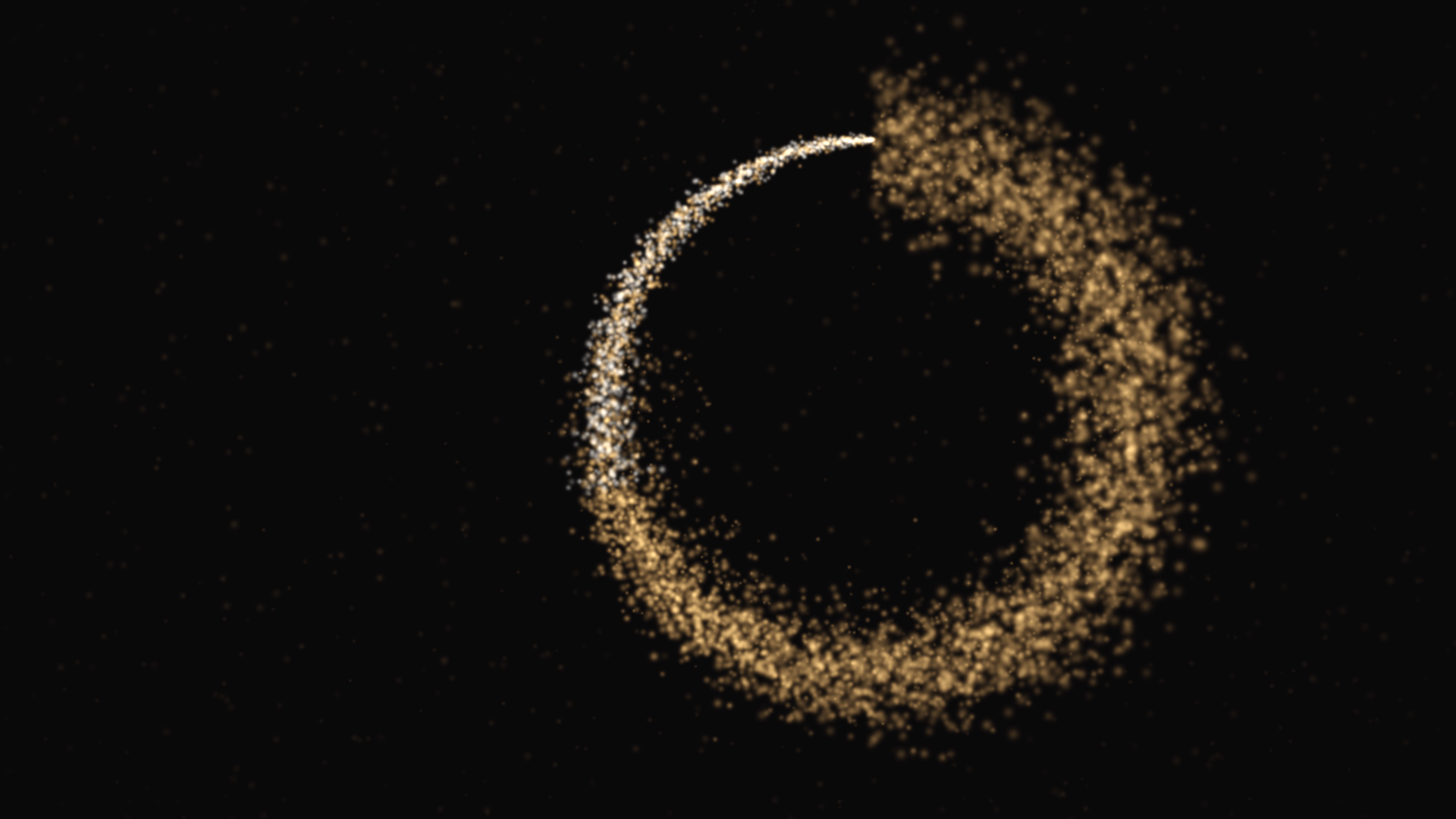
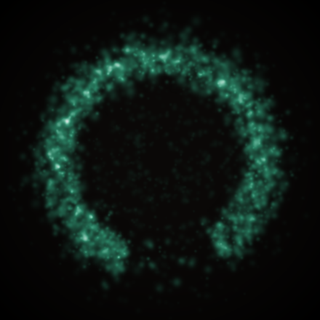
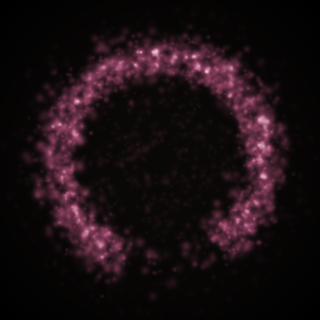
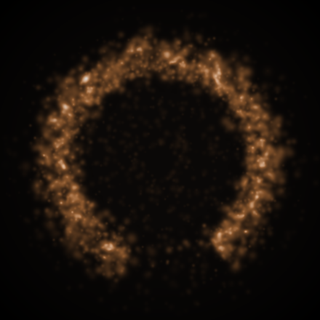
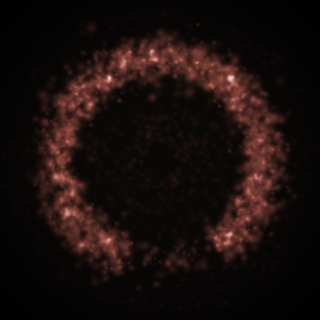
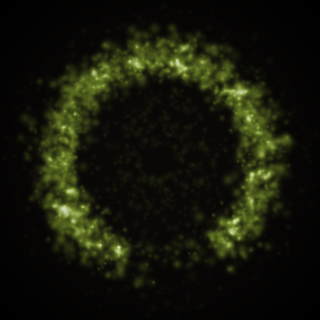
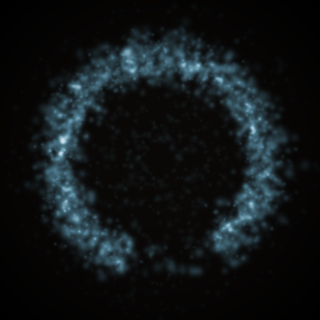
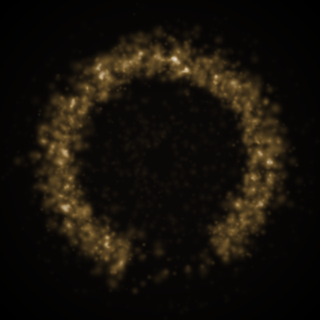
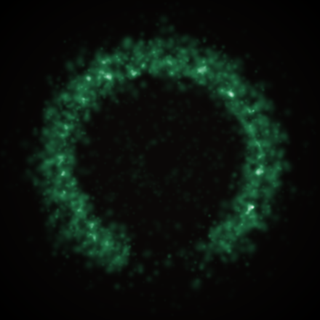
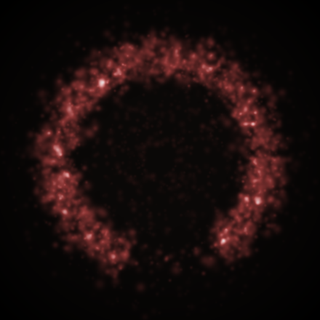
Our mark is a single bright boundary that holds at the top and dissolves into discrete data as it travels — a circle with a door in it, data drawn in and never leaving. People take it for decoration. It is a wiring diagram. It is the demon's door, drawn: the place where the sorting happens, the edge that keeps the box closed, the small bright cost of turning a roomful of noise into one quiet, correct word. The restraint, the scarcity, and the privacy are not three virtues we happen to stock. They are one law, seen from three sides. Maxwell understood the hardest part a hundred and fifty years ago: order is never free, and the only beings worth trusting with it are the ones honest about the price.